
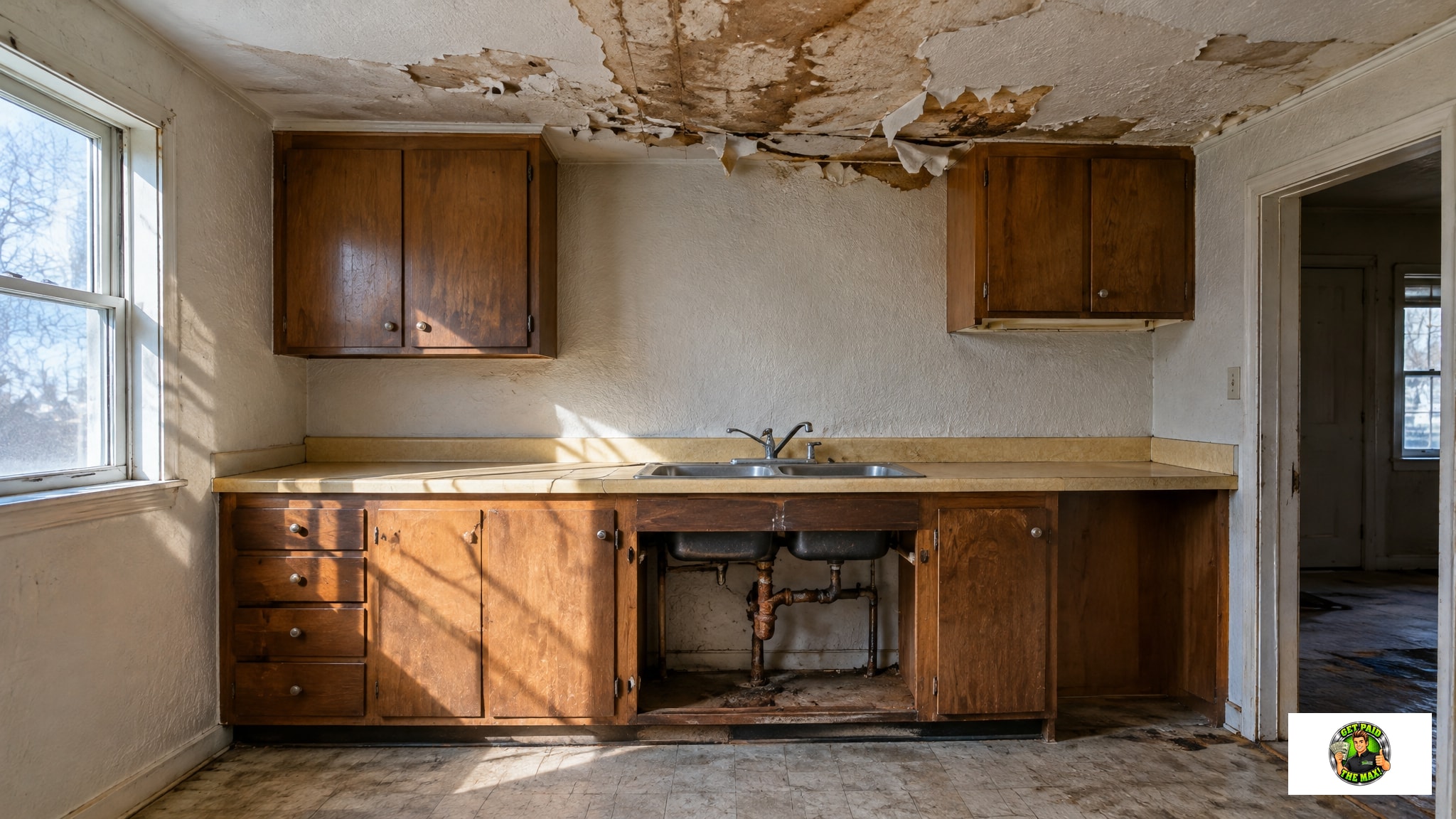
You know the house needs work. The roof leaks, the kitchen is dated, or there’s a crack in the slab you’d rather not think about. Now you’re being told to fix everything before anyone will make a serious offer.
You don’t have to. You can sell a house that needs repairs in its current condition, to a buyer who wants it that way. Here is how that works, what it costs you, and what to watch for.
What Puts Buyers Off in a Traditional Sale
Most buyers who walk through a listing want a house they can move into. They aren’t picturing a project, so visible damage hits them before they see the layout or the yard.
A few problems do the most harm to value and to buyer confidence:
- Roof leaks and water-stained ceilings
- Foundation cracks and other structural movement
- Mold or long-term moisture damage
- Fire damage, or old electrical and plumbing systems
- Anything that signals the house has been neglected
The listing photos show the damage, and the inspection finds what the photos missed. That second step is where many deals die, because a buyer who found one surprise starts wondering what else is hiding.
Then the pattern repeats. The house sits, you cut the price, it sits again, and each reduction tells the next buyer that something is wrong. A house that needs repairs rarely fails to sell because of one flaw, but because the flaws, the inspection findings and the shrinking price all feed each other until buyers stop looking.
So the choice is simpler than it feels. You either fix the house first, or you sell it in its current condition.
What an As-Is Home Sale Really Means
In an as-is home sale, you sell the house in its present state and don’t repair anything for the buyer. What you see is what the buyer gets.
That sounds clean. The catch is that “as-is” can describe two very different sales.
How an As-Is Cash Sale Differs From an As-Is Listing
When you list as-is with an agent, you’re still selling to the open market. Buyers still tour the house, and most still bring an inspector, a lender and an appraiser. An inspection report can still lead to repair requests or a lower offer, and a buyer using a mortgage can still back out if the numbers or the property condition don’t clear underwriting.
An as-is cash sale is built to skip that. Max Buyer buys houses directly from homeowners for cash, so the conversation starts from the house’s current condition. There are no inspection contingencies and no repair negotiation, and you don’t pay a commission.
This route fits owners in situations like these:
- You inherited a house you don’t want to fix or keep
- The house is going through probate
- It’s vacant and costing you money every month
- It’s a rental with tenant damage or constant repairs
- It’s distressed, and a bank-financed buyer would never qualify
One rule applies to every cash offer, from any buyer. Before you sign, confirm each term in writing: the price, the closing date, who pays which costs, and what happens if something changes. A good buyer won’t mind you asking.
Selling a Home That Needs Repairs: Fix It First or Sell As-Is?
Fixing first looks like the safe move, because a repaired house should sell for more. It can, but only if the repairs go smoothly and the extra sale price covers what you spent while waiting. For many owners it doesn’t.
What Fixing First Really Costs You
Picture a typical case. You inherit a house with a leaking roof, water-stained ceilings and a cracked slab. While you collect repair bids, property taxes, insurance and utilities keep running, and the house still isn’t listed.
Those carrying costs are the part people forget. Add a mortgage payment if there is one, and every month of delay has a price.
Then the repairs themselves:
- Contractors are booked out, so start dates slip
- Opening a wall often reveals more damage, so the budget grows
- Renovation dollars don’t always come back at sale, since a buyer may not pay full price for a new kitchen in a house that still looks tired
- You manage the work, the payments and the schedule while living somewhere else
Fixing first is not wrong in every case. If the house needs only light cosmetic work and you have months to spare, it may pay off. If you need to sell quickly, or the problems are big, it usually doesn’t.
Repair and List, List As-Is, or Sell for Cash: Side by Side
The three routes trade price against time and effort, so here is how they compare.
| Repair and list | List as-is | Cash sale | |
|---|---|---|---|
| Price | Highest potential, after repair costs | Lower; buyers discount for the work | Below retail, with no repair spend |
| Timing | Slowest: repairs, then listing, then a buyer’s loan | Unpredictable; depends on finding a buyer | Set by you and the buyer, not a lender |
| Showings | Many | Many | Few or none |
| Commissions | Yes | Yes | None |
The real trade-off is price against certainty. A cash sale gives up some of the top-end price, and in return you skip repair bills, showings, commissions and financing delays. If you want the highest possible number and have the time and money to get there, the cash route is not for you.
How a Cash Offer for a Damaged House Is Calculated
A cash offer on a damaged house follows a method, not a mood. Knowing the method helps you judge any number you’re given.
Why a Cash Offer on a Fixer-Upper Lands Below Retail
Investors and cash buyers usually start with what the house would be worth once it’s repaired. Then they subtract the costs of getting it there:
- The repair work itself
- Holding costs while they fix and resell, such as taxes, insurance and utilities
- Resale risk, because the market can move before the house sells
- Their own margin
What’s left is the offer. It lands below a retail listing price because the buyer takes on the repairs, the waiting and the risk that you would otherwise carry.
If you want to sell a fixer-upper for cash, this is the logic to expect. A low number isn’t an insult. It’s the cost of work that you aren’t doing, and the risk you’re no longer holding.
It does mean the offer won’t match what a fully renovated house would fetch. Compare it with your real alternative, which is the retail price minus repairs, carrying costs, commissions and months of waiting.
Questions to Ask Before You Accept a Cash Offer
A cash offer is only as good as its terms. Ask the buyer these before you agree:
- What exactly does the offer cover, and does it include the house in its current condition with nothing to fix?
- Do any fees or closing costs come out of the amount you’re quoted?
- What is the closing date, and can it move if you need more time?
- Is every term written down?
Get the answers on paper. A cash closing skips the lender’s underwriting and appraisal steps, which are a frequent source of delay in traditional sales, so the timeline comes down to what you and the buyer agree.
Selling a House With Foundation Issues
Foundation trouble scares owners more than almost anything else. You may assume the house is unsellable until a structural engineer signs off and a contractor fixes the slab.
You can sell a house with foundation issues without repairing it first. The route you choose decides how hard that is.
Why Foundation Problems Stall Traditional Sales
Two hurdles come up again and again. First, buyers who spot cracks or uneven floors often ask for an engineer’s evaluation, which adds cost and time before they’ll commit. Second, many mortgage programs set minimum property condition standards, and a house with serious structural damage may not meet them.
When the buyer’s lender won’t fund the house, the deal falls apart no matter how much the buyer likes it. That is a common reason these sales stall.
What a Cash Buyer Needs to See to Make an Offer
A cash buyer isn’t bound by a lender’s condition rules, so you usually don’t need a new engineering study first. Most can begin from photos, your own notes on what you’ve seen, and any reports you already have, such as an earlier inspection or a contractor’s estimate. How the buyer then confirms the condition, including any walkthrough, is a fair question to ask up front.
If you have paperwork on the foundation, share it. If you don’t, say so plainly and describe what you’ve noticed: where the cracks are, whether doors stick, and whether the problem is getting worse.
Disclosure Worries: What to Know Before You Sell As-Is
Plenty of owners stay quiet about problems because they think disclosure kills deals. It’s an understandable fear, but hiding a known problem tends to cause far worse trouble later than admitting it up front.
Think of honesty as protection. When you describe the damage openly, the buyer prices it in and nothing can surprise either of you at the closing table. Late surprises are what break sales and start disputes.
Selling as-is doesn’t make your obligations disappear. Disclosure rules vary by state, so ask a licensed real estate attorney what applies to your property before you sign. This article isn’t legal advice.
How to Get a Cash Offer on Your House
If a buyer or an inspector has already told you to fix things you don’t want to fix, you have another option. You can stop negotiating repairs altogether and ask for an offer on the house as it stands.
The process is short. You send the details, the buyer reviews them and comes back with a number, and you decide. If the terms work and are in writing, you pick a closing date that suits you.
What to Have Ready Before You Request an Offer
You don’t need a perfect file. These items help the buyer move quickly:
- The property address
- A handful of photos, including the worst areas
- A plain list of the problems you know about
- Your timeline, and whether you need to close fast or on a set date
- Any repair estimates or reports you already have
Missing something? Request the offer anyway and fill in the rest later.
Max Buyer buys houses for cash in Broward, Miami-Dade and Palm Beach County. You don’t need to repair, clean out or stage anything first. Request a cash offer on your house as it stands, and you’ll see the number before you decide anything.
Frequently asked questions
What is the most common reason a house that needs repairs fails to sell?
Price that doesn’t match condition is the usual culprit. Buyers see the damage in the photos, an inspection finds more, and the listing goes through rounds of price cuts that make it look worse. Financing is the second big one, since lenders may refuse a house in poor condition.
What devalues a house the most?
Structural problems such as foundation damage, roof leaks, and water or mold damage usually hurt value most. They are expensive to fix, and they make buyers worry about what else is wrong. Dated finishes and cosmetic wear cost far less to overcome.
What can I do if a buyer insists on repairs I don’t want to make?
You have three options: agree to the repairs, offer a price reduction or credit instead, or sell to a buyer who doesn’t ask for repairs. A cash buyer purchases the house in its current condition, so there is no repair negotiation to get stuck in.
What is the hardest month to sell a house?
No single month is hardest everywhere. In many markets, activity slows in late fall and around the winter holidays, and that can stretch a listing that already has problems. A cash sale doesn’t depend on the season, because you and the buyer set the closing date.
Will I need to disclose problems if I sell as-is?
Disclosure rules vary by state, and selling as-is doesn’t automatically remove them. Talk to a licensed real estate attorney about what applies to your property. In practice, telling the buyer about known problems up front protects you from late surprises.