
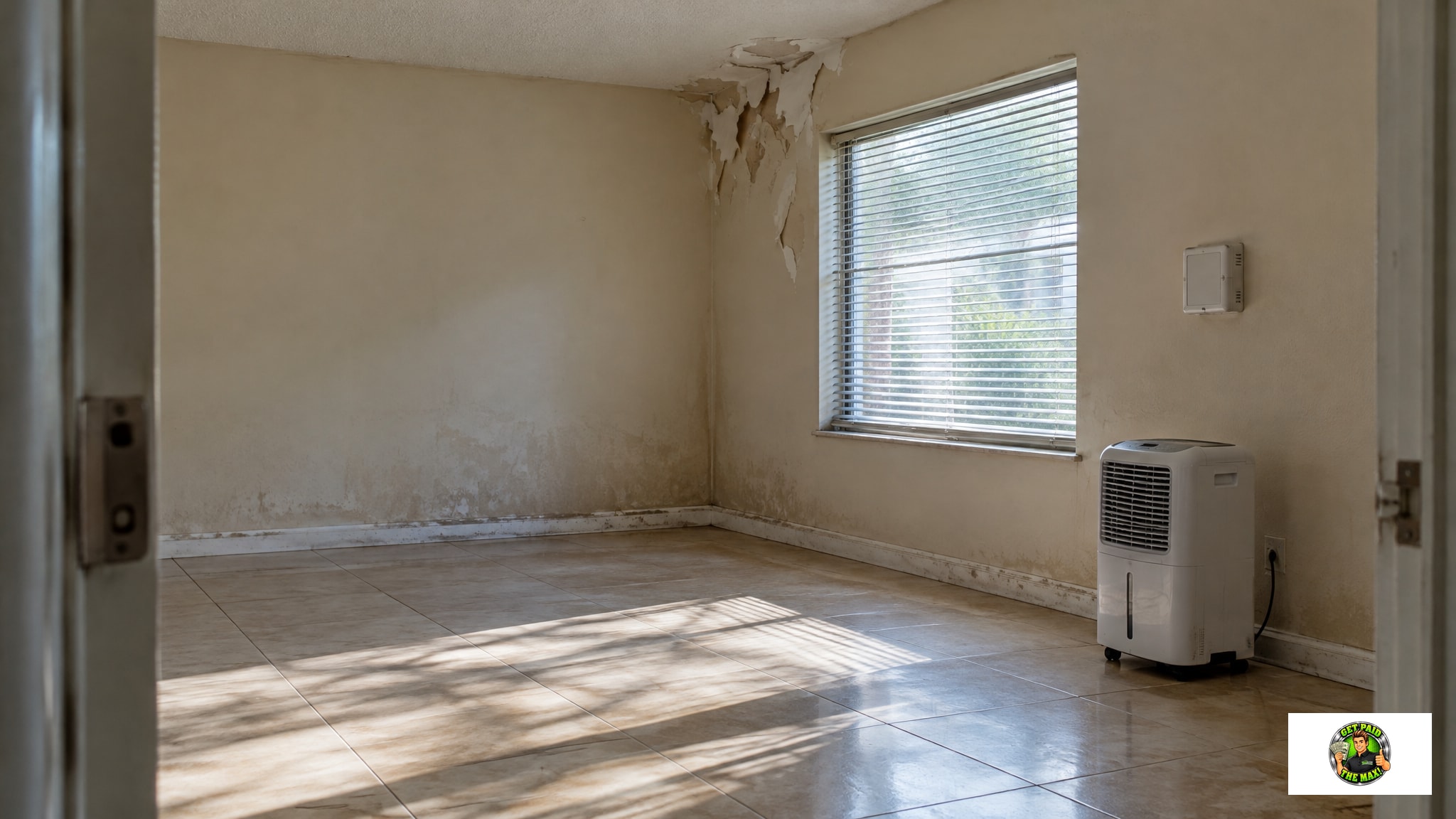
An empty house looks like it’s costing you nothing. It isn’t. The tax bill still arrives, the insurance still renews, and the humidity in South Florida keeps working on the walls, the ceilings and the AC whether anyone is home or not.
If you want to sell a vacant house fast, the useful question is how much each extra month costs you. This guide adds those costs up, shows why a listing drags for an empty home, and explains where a cash sale fits. When you’re ready, you can request a cash offer on your vacant house from Max Buyer.
What a vacant house costs you while it sits
Vacancy costs come in two kinds: bills you can see on a statement, and damage you can’t see until you walk through the door. Both grow every month the house stays unsold.
The bills that keep running with nobody inside
Nobody lives there, but the house still has a full set of bills. Here is what keeps coming:
- Property taxes. They accrue whether or not the house is occupied.
- Insurance. The premium stays due. Insurers also commonly tighten terms or raise premiums once a home has been empty for a while, so read your policy’s vacancy language and ask your insurer before you assume you’re covered.
- Utilities. You keep power and water on to protect the systems. The AC has to run, or the humidity takes over.
- Upkeep. Lawn, pool, gutters and general checking-in don’t stop because the house is empty. Someone has to do them, and that someone is you or someone you pay.
- Local fees and citations. Some cities and counties charge fees for vacant properties or write code citations for overgrown yards and neglected exteriors. Check the rules where the house sits.
None of these is huge on its own. Together they run every month, with nothing coming back, and that is why a house that sits for six months costs far more than a house that sits for one.
The damage that builds while no one is watching
The second cost is harder to budget for. A house that nobody opens, runs or checks starts to slip, and South Florida’s climate speeds it up.
Moisture is the main culprit. Humid air gets into a closed-up house, and mold can start in closets, bathrooms and behind furniture before anyone notices. If the AC fails or gets turned up to save power, the problem moves faster. Pests move in when there’s no foot traffic to discourage them. A storm can loosen roof tiles or send water in through a weak spot, and with nobody home, a small leak runs for weeks.
Then there’s the human risk. Empty houses attract break-ins, theft and vandalism, because a dark house with an overgrown yard signals that nobody is looking.
Picture a typical case: a single-family home in Broward County sits empty after the owner moves out. The AC is set high to save on power, humidity builds, mold starts in a closet, and a storm loosens a roof tile. The house that was ready to list becomes a repair list before anyone has toured it.
Why a traditional listing is slow for an empty house
A listing can work well for a house in good shape and an owner with time. An empty house tends to be neither, and the open market asks a lot of it before it closes.
First, the house has to stay show-ready for strangers. That means clean, cooled, lit and open for showings on the buyers’ schedule, which is hard to keep up when you’re not living there and may not even live nearby.
Second, most buyers need a mortgage, and a loan adds waiting time. The lender orders an appraisal, the underwriter reviews the file, and the sale can stall or fall apart if the numbers don’t line up. You wait on someone else’s financing while your own bills keep running.
Third, the buyer’s inspection often produces a repair request. A vacant house that has sat through a few humid months is the kind of place where an inspector finds things, and every item reopens the price talk.
Finally, the agent’s commission comes out of your proceeds at closing, so the number you saw on the listing sheet is not the number you keep.
A listing isn’t a bad route. It simply gives you no control over the timeline, and for an empty house that is the one thing you can’t afford to lose.
Selling a vacant house fast with a cash offer
A cash sale changes the order of things. Instead of preparing the house for the market and hoping a buyer’s loan comes through, you get an offer from a buyer who doesn’t need financing, then agree on a closing date.
Max Buyer buys houses for cash across Broward, Miami-Dade and Palm Beach counties, as-is, so sellers can skip repairs, showings, commissions and the financing delays that slow a traditional sale.
How a cash sale stops the monthly costs sooner
Your carrying costs end when the sale closes and the house is no longer yours. With a financed listing, that date depends on a buyer being found, a loan being approved and an appraisal coming back right. With a cash sale, the closing date is one you and the buyer agree on, so it is usually far sooner, and you can plan around it.
That matters because every month removed is a month without taxes, insurance, utilities and upkeep on a house you no longer want. It also ends the risk. Once you’ve closed, a storm, a leak or a break-in is no longer your problem.
What you skip when you sell an empty house for cash
Think of the skipped work as friction removed. Here is what drops off your list:
- Repairs. Max Buyer buys the house as-is, so you don’t fix the roof, the AC or the mold before you sell.
- Staging and cleaning for the market. You don’t prepare a house for photos.
- Showings. No strangers walking through, no scheduling around buyers’ calendars.
- Commissions. Max Buyer’s offer comes with no commissions or fees. Confirm the exact closing-cost terms in writing before you accept, as covered below.
- Waiting on a buyer’s loan. There’s no appraisal or lender decision to sit through.
What a cash sale does not do is pay you full retail value. The next section covers the trade.
Listing vs. a cash sale: compare what you actually keep
The headline price doesn’t tell you what you keep. Compare the net amounts instead, and use your own figures for each line.
For a listing: the likely sale price, minus the agent’s commission, minus the repairs a buyer will ask for, minus the carrying costs you’ll pay until a listed sale would close.
For a cash offer: the offer, minus any closing costs you’d still owe.
To be upfront, Max Buyer is the buyer in this comparison, so check the numbers yourself rather than taking our word for how they come out.
Weigh carrying costs against the price gap
The cash offer will usually be the smaller number at the top. The question is whether it’s still smaller after you subtract everything the listing takes out.
Add up the taxes, insurance, utilities and upkeep for each month you expect the house to stay on the market, then add your repair estimate and the commission. If that total comes close to the price gap, the cash offer is competitive. If the house is in good shape, cheap to hold and you’re in no rush, a listing may leave you with more, and a cash sale isn’t the better route for you.
The longer the house is likely to sit, and the more repair it needs, the more the comparison tilts toward cash.
Why a cash offer usually comes in below retail value
A cash offer usually lands below full retail value, and there are reasons for it. The buyer prices in the repairs the house needs, the time they’ll hold it before reselling, and the risk that the resale doesn’t go to plan.
The gap is what speed and certainty cost. You are paying a discount for a fixed closing date, no repairs and no showings. For some owners that’s a good trade, and for others it isn’t, which is why running your own numbers comes first.
When selling to a vacant property buyer makes sense
A cash sale fits best when time, effort or money is the thing you’re short of. These are the typical cases:
- A house left empty after a move. You’ve relocated, the old house sits, and the bills follow you.
- An inherited or probate property waiting on the estate. You’re holding a house you didn’t plan on, often from a distance, and you want it off your plate.
- A rental that’s empty between tenants. The income has stopped but the costs haven’t.
- A distressed house needing more repair than you want to fund. Selling as-is means you don’t put money into a house you’re about to leave.
If you recognise your situation here, a cash sale is likely worth a quote. If your house is move-in ready, close to market-ready and you have months to spare, you probably don’t need it.
What to confirm before you accept an offer
A cash offer is only as good as its terms, and a plain agreement protects you. Before you say yes, make sure the offer is clear on each point below.
Written terms worth asking for
- Proof of funds. Ask the buyer to show that the money is there.
- The closing date. You want a specific date, not a vague “soon.”
- Closing costs. Which ones, if any, you would still pay.
- What’s included and excluded. Appliances, fixtures and anything left in the house.
- If the deal falls through. What happens to the process, and to you, if the buyer doesn’t close.
- Existing loans or liens. How they get paid off from the proceeds at closing.
Get all of this in writing so you aren’t relying on a conversation. For questions about contract wording or title, a licensed attorney is the right person to ask, and this article isn’t legal advice.
Request your cash offer on a vacant home
Every month the house sits, the bills add up and the risk grows. If you want to stop the cost, request a cash offer on your vacant house through the Max Buyer site. Max Buyer buys in Broward, Miami-Dade and Palm Beach counties.
How the process runs from first contact to closing
- Request your offer. Send the property details through the Max Buyer site, including the address and a note on the condition.
- Review the offer. Compare it using the net-proceeds check above, with your own repair and carrying-cost figures.
- Confirm the terms in writing. Go through the list above, including closing costs and how any loan or lien gets paid.
- Agree on a closing date. The timing is a date you and Max Buyer set together, not a promised number of days.
- Close and stop the bills. Once the sale closes, the taxes, insurance, utilities and upkeep are no longer yours.
Request your cash offer on your vacant house from Max Buyer.
Frequently asked questions
Is it worth it to sell my house to a company?
It’s worth it when the speed and certainty are worth more to you than the price gap. Add up the commission, repairs and carrying costs a listing would cost you, then subtract your closing costs from the cash offer and compare the two net amounts. If the house is in good shape and cheap to hold, a listing may leave you with more.
How much commission do you pay on a $300,000 house?
Commission is a percentage of the sale price and is negotiated with the agent, so it varies. As a guide, every one percentage point on $300,000 is $3,000. Check the rate in your listing agreement and subtract it from your expected proceeds. Max Buyer’s offer comes with no commissions or fees.
Does a cash sale stop my carrying costs sooner than a listing?
Usually, yes. Your taxes, insurance, utilities and upkeep stop when the sale closes. A cash sale closes on a date you agree on, while a financed listing waits on showings, a buyer’s loan and an appraisal.
What happens if there’s a mortgage or lien on the vacant house?
Existing loans and liens are normally paid from the sale proceeds at closing. Ask for that to be spelled out in writing so you know what you’ll receive after the payoff. For questions about title or contract wording, speak to a licensed attorney.